


As a writer, accessibility tester, and lifelong assistive technology user, I think about inclusion every day — not just on December 3rd. The International Day of Persons with Disabilities (IDPD) is a global reminder of what I experience firsthand: that accessibility is not a luxury or an add-on, but a pathway to independence, creativity, and connection.
This day matters because it brings visibility to disabled people’s lives, ideas, and leadership. It reminds the world that inclusion begins when we center disabled voices and design with access in mind from the very start.
Why This Day Matters
The International Day of Persons with Disabilities highlights the importance of seeing disability not as a limitation, but as part of the diversity that strengthens our communities. It’s a moment to reflect on how far we’ve come — and how far we still have to go.
Accessibility isn’t just about ramps and captions (though those are essential). It’s about representation, opportunity, and respect. It’s about ensuring that disabled people are included in conversations about technology, employment, education, art, and innovation — not as an afterthought, but as leaders and change-makers.
This Year’s Theme: “Building an Inclusive Future for All”
This year’s global theme, “Building an Inclusive Future for All,” resonates deeply. It challenges every person, organization, and community to look at how we design the world around us. Is it built for everyone — or only for some?
An inclusive future means websites that work with screen readers. It means workplaces that welcome neurodivergent thinkers. It means cities where everyone can move freely, access information, and be heard.
Accessibility isn’t a box to check — it’s a value to live by.
Moving from Awareness to Action
Awareness is a starting point, not the finish line. The next step is accountability. That means asking hard questions: Are our spaces and events truly inclusive? Are our materials readable, captioned, and translated? Are we hiring disabled professionals and valuing their expertise?
Inclusion grows when we listen to lived experience and design with it in mind. When we collaborate — not for people with disabilities, but with people with disabilities — we create solutions that benefit everyone.
How You Can Participate
- Learn and share about accessibility and inclusion. Use the hashtags #IDPD2025 or #DisabilityInclusion to connect with others.
- Support disability-led organizations and creators in your community.
- Review your own spaces — digital or physical — and take one step toward greater accessibility.
- Engage in conversation. Ask questions, seek perspectives, and listen deeply.
Every action — no matter how small — helps build a culture of access and belonging.
A Personal Reflection
As someone who lives and works in accessibility, I see every day how design choices shape independence and opportunity. The technologies, environments, and policies we build today can either create barriers or open doors.
The International Day of Persons with Disabilities reminds us to keep those doors open — and to make sure everyone has a voice in shaping the future.
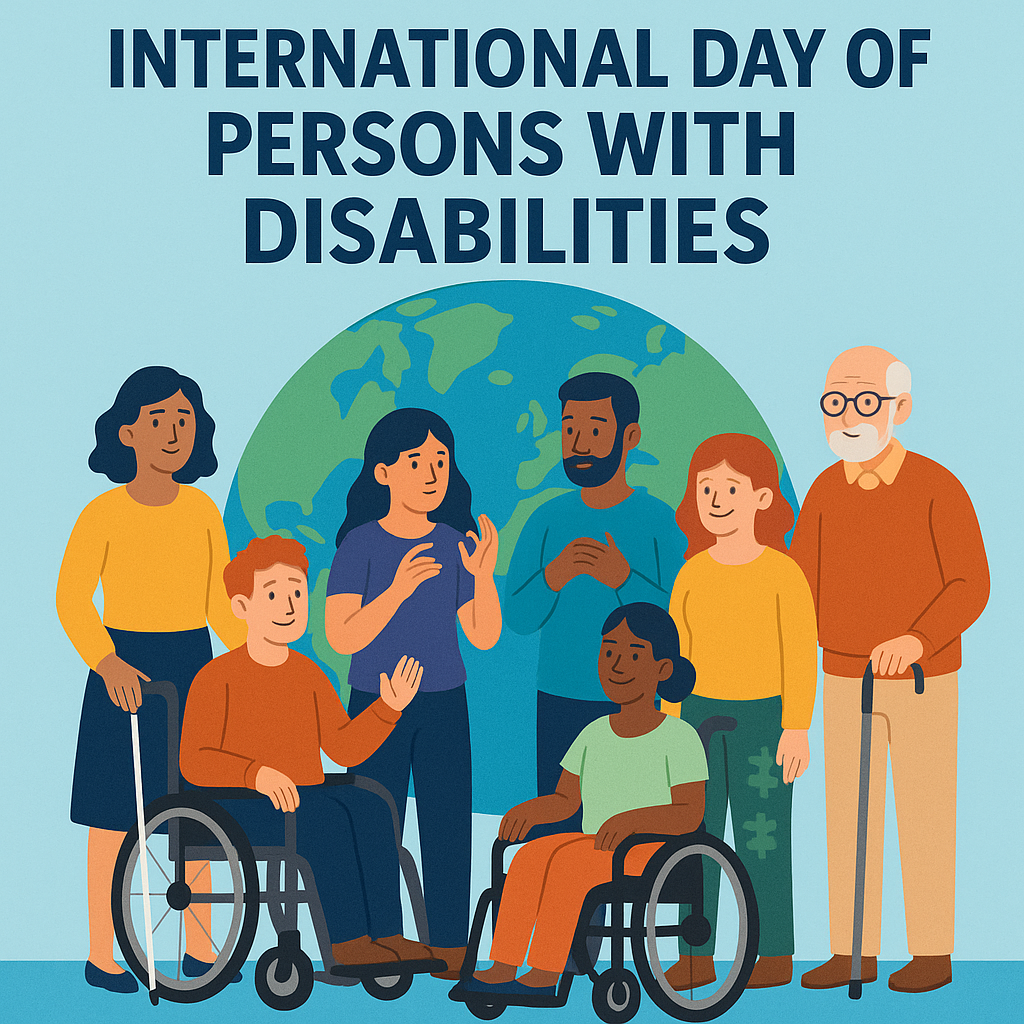
Image description (example if you include one): A bright illustration of people with diverse disabilities — wheelchair users, cane users, Deaf individuals signing, and neurodivergent people — standing together in front of a globe, symbolizing inclusion and unity.
Leave a Reply